AI video generators like Open AI Sora and Google Veo are the subject of many a lunchtime discussion at Nova – here are our co-founder Matt Stephenson’s thoughts on how the emergence of AI will impact the work we do…
In the coming months and years artificial intelligence is going to bring some very big changes to the kind of content we all watch online.
For those of you who haven’t seen this stuff, basically what they do is turn written or spoken ideas into what-appears-to-be-real video.
So tell Sora or Veo that you want to see a handsome black man and a grey haired white woman, both dressed in denim, walking through an Aztec village at dusk where they encounter a talking crow in a Hawaiian shirt who says the words “Would you like to drink some Vimto my beautiful friends?” – and that’s what you’ll see.
It will look like real film, shot by a real crew. You will believe these are real actors and that the crow is a real crow with a real voice. You will think that the rainforest is a real rainforest… You can develop the initial idea by requesting shots from different angles, close-ups, mid-shots, aerial shots… you get my drift.
At a price, this technology is now available for everyone to use. Currently, it’s a bit glitchy, but it’s improving by the minute and very soon we will be seeing the bizarre products of a billion imaginations flooding social media.
Prepare yourselves because – metaphorically speaking – there will be a LOT of talking crows offering Vimto, and at first it’ll be wow, have you seen the talking crow? Then everyone will get numb because there will be soooo much content and we’ll all become even more confused about what’s real than we already are…
What does this mean for a video production company like Nova?
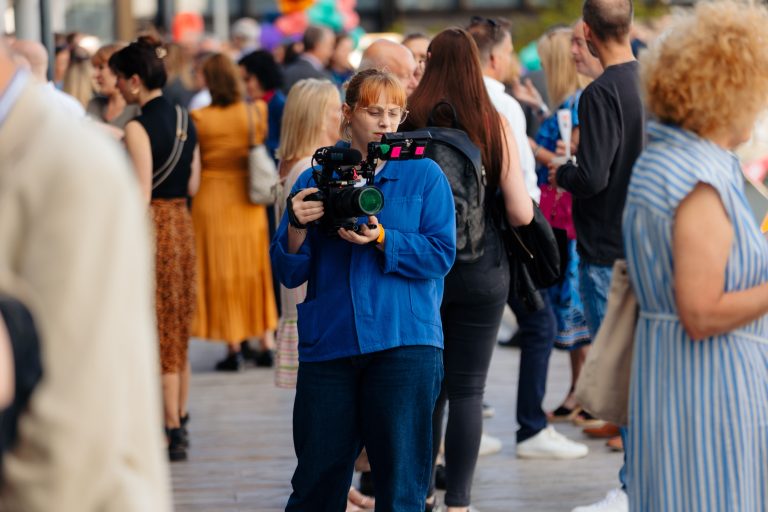
The vast majority of the content we produce for our clients is based on real interviews with real people and Artificial Intelligence can never capture or replace that.
Real people talking to real people, hearing about real experiences communicated with real emotions – that’s the very foundation of what we do. And then we take that back to the office and real people edit it. We make real judgements about what’s valuable, we look for emphasis and feeling, we see what’s happening in people’s eyes and through their expressions, we build emotional rhythm and pace in the way we cut our footage.
Real stories need real emotions
People will always want those stories and that emotional reality to be communicated: and that’s what a good video production company does.
But there are other projects we work on where AI really will make a difference, particularly brand films – and we’re looking forward to incorporating it into our work.
For example, maybe a company wants to show how its products are being delivered to countries all around the world. Rather than sending a crew to 5 different countries to film those shots, using AI we’ll be able to fine tune images that show a branded lorry on the road in India, Italy, Kenya, Mexico and Iceland – and you’ll believe that’s what you’re really seeing (we’ll discuss the ethics of such trickery another time).
Maybe a drinks company wants to see it’s cordial being poured into a tall glass of iced water on a rustic dining table in the mountains of Umbria… AI will sort it.
The importance of human creativity
But AI video generation still relies on the creativity of the human imagination that feeds it. It still needs the human judgement of a director and cinematographer who will decide whether the AI generated image feels right. It still needs the human editor to ensure that the AI generated images flow and have the right impact and emotional power.
At Nova we’re learning fast about AI and we’ve no doubt it will eventually become an incredibly useful tool in the storytelling services we provide.
But in the meantime prepare yourself for a world of dancing statues, talking crows in Hawaiian shirts and cats in silver waistcoats on the moon.