
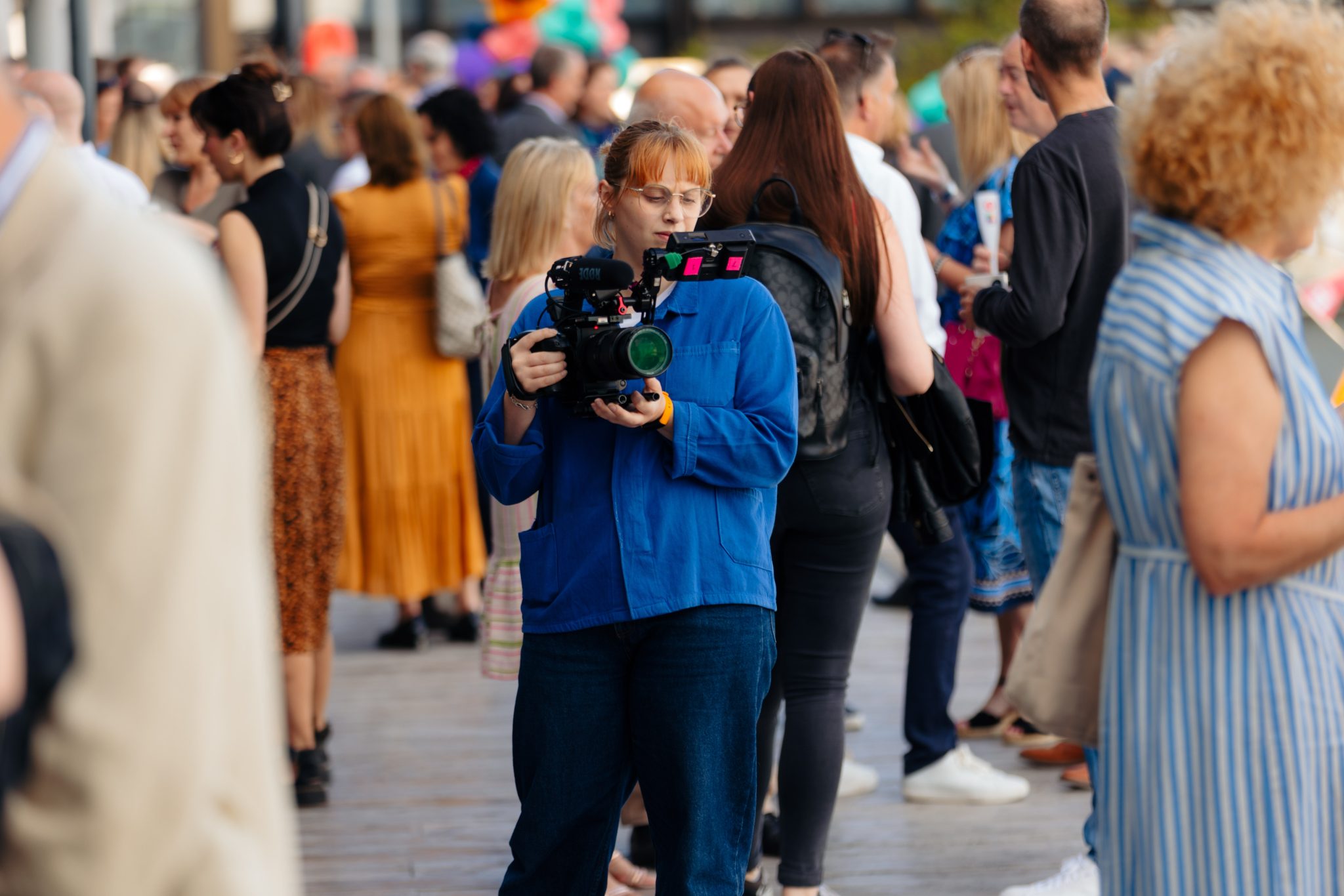
If you’re planning a video project with us here at Nova, this guide will help you get the best results without wasting time, budget or energy. It’s based on years of real-world experience making films for leading organisations across the North of England. These are the DOs and DON’Ts that make the difference between a mediocre video and one that really works.
1) Please DO get really involved in the planning of your project. The more collaboration the better.
The whole thing works best when someone in your team is working closely with us and helping to make things happen. You know your organisation and people better than us. We love it when we’ve got your ideas and support.
2) DON’T expect a two minute film for social media to do everything.
Remember that this is a film, it’s not a list. Focus on one or two clear, engaging messages. Focus on real people and their feelings or experiences, tell a story. Don’t try to make your film say everything about who you are – save that for your website – or better still, make more films.
3) Film-makers, DO remember the film should be appropriate to your client and their audience, not a chance for you to indulge your Hollywood fantasies.
It’s not bleedin’ Top Gun, so can we drop the bombastic music and the drone shots? The style and content should always be appropriate to the client and their audience. We won’t spend our clients’ money unless we’re sure it’s in their best interest.
4) In interviews, please DON’T prepare too heavily and DON’T script your answers.
Please just be you and say what you know. We won’t ask you anything tricky. We’ll help you. You’re allowed to ramble, you can get it wrong, we’ll retake as often as you like and we can fix it in the edit. It’s always better when it’s relaxed and natural.
5) DON’T underestimate the need for lots of interesting additional footage.
This is also known as B-roll (the interviews are the A-roll) and it’s essential if you want a high quality film that really stands out. B-roll is basically all of the footage that shows what you do. It gives the film character, tells a visual story and it also helps us to make interviews sound great by covering our cuts. The better the B-roll, the better the film.
6) DO allow enough time for us to shoot.
In the days and weeks before we shoot, careful planning and collaboration will mean we can work economically to get the best possible content. We aim to shoot sequences of meaningful activity (people doing real, interesting stuff) and that takes some time. If you’re on a smaller budget that’s fine, but sometimes it’s better to focus on less and do it better – a whirlwind schedule won’t always reap the best results.
7) If we’re shooting at your workplace, please DON’T think that an interview shot in a tiny white office will ever look like anything other than an interview shot in a tiny white office.
A large, quiet, non-echoey room where we can control the lighting is always our preference.
8) DO try to make sure that the people who appear in your film represent the diversity of your potential workforce, customers and audience.
We live in communities of fascinating people who are all unique and all equal. If that diversity is reflected in your film then your organisation will be appealing to the widest potential audience, thereby maximising your opportunity for engagement or sales. You’ll also be playing a part in building a better, more equal world. Which is one of the reasons we started doing this in the first place.
9) DON’T think that if a film is shorter, then it’s cheaper.
Because it ain’t necessarily so. The cost is determined by the complexity of the project and the time it takes to gather and prepare all of the ingredients, not by the duration of the film. We’ve made many longer films that didn’t cost a lot and loads of short films that cost tons.
10) And finally…
Every once in a while we’re asked if we can make a film where someone throws a ball out of the shot and then another person in a different shot catches it. Please DO NOT ask us to do this.


